
HAEGER VALVES LLC
ANSI industrial valves
Our wide range of DIN and ANSI industrial valves covers a broad spectrum of applications - from precise flow and pressure control to reliable integration into complex piping systems for a variety of media. At Haeger, you benefit from a complete package: industrial valves, expert consultation, commissioning, maintenance, and service - all from a single source, supported by over 20 years of experience.
What are Industrial Valves?
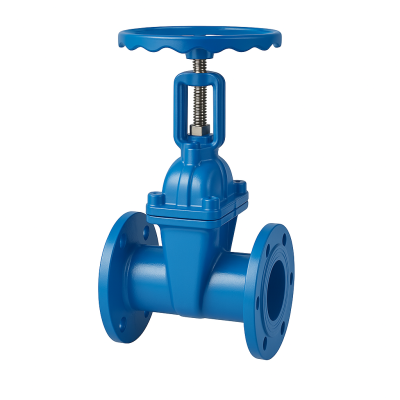
Industrial valves are mechanical devices used to regulate the flow and pressure of fluids in systems and processes. They are fundamental components in pipelines transporting liquids, gases, steam, slurries, and similar substances.
Although there are many valve types, all share the same basic components: a body, bonnet, internal trim, actuator, and a gland packing for sealing.
Types of Industrial Valves we offer
Ball valves
Each type is available in various models with specific features and functions. Some operate automatically, while others are manually controlled or use pneumatic or hydraulic actuators. We provide detailed advice to help you select the right valve for your system.
Basic Functions of Industrial Valves
The main function of industrial valves is to control the flow of liquids or gases in pipelines. They can stop, regulate, release, or redirect flow and manage pressure. Designs differ according to the function required. Proper sizing is critical for safe and reliable operation, particularly because industrial valves are often expensive.
All valves generally include a body, actuator, internal trim, operating mechanism, and packing gland for sealing.

Valve Components
The valve body, also called the housing, is the core component of any valve. It provides the main structure of the assembly, holding all other parts together, and serves as the primary pressure boundary, designed to withstand the internal pressures of the media flowing through connected pipelines. The body links the inlet and outlet piping via threaded, flanged, bolted, or welded connections, with ends configured to match the pipeline type - such as butt weld, socket weld, threaded, or flanged. Valve bodies are typically cast or forged and shaped according to specific functional requirements, using materials suitable for the intended application.
The bonnet covers the opening in the valve body and is the second most critical part in pressure valves. Like the body, bonnets are available in a variety of designs and are usually cast or forged from the same material as the body. They are attached using threaded, bolted, or welded connections. During assembly, internal components such as the stem, plug, or wedge are inserted, and the bonnet holds them in place. The connection between the bonnet and body is considered a pressure boundary, meaning that welds or bolts attaching it are pressure-retaining elements.
The valve trim refers to the removable internal parts in contact with the flow medium, including seats, plugs, wedges, fasteners, spacers, guides, bushings, and springs. While the body, bonnet, and gaskets also contact the medium, they are not part of the trim.
Trim design - defined by the interface between disc and seat - determines flow characteristics. In rotary motion valves, the plug or wedge moves closely past the seat, while in linear motion valves, the disc lifts perpendicularly to create an annular flow path.
Trim components can be made from various materials depending on the forces and conditions they face, such as chemical composition, pressure, temperature, flow velocity, or viscosity. For instance, valve discs and seats are exposed to different conditions as bushings and packing glands. Flow media properties are essential factors in the selection of the trim materials. Trim may or may not match the valve body or bonnet material.
The disc controls, throttles, or stops the flow depending on its position and acts as the primary shut-off element. It is the third key pressure-retaining component, as the full system pressure acts upon it when closed. Discs are usually forged or cast and, in some cases, hard-faced (e.g., Stellite) to enhance wear resistance.
The seat or sealing rings provide the surface against which the disc rests to stop or control flow. A valve may have one or more seats: check valves usually have a single seat forming a seal with the disc, while gate valves have two - one upstream and one downstream. The gate valve disc has two contact surfaces that form the seal, halting the flow.
To enhance durability, seating surfaces are often hard-faced with weld overlay. A smooth finish in the seat area is essential for a tight seal when the valve is closed. Seating rings themselves are generally not considered pressure-retaining components, as the valve body alone is sufficient to handle the design pressure.
The stem transmits motion to the disc, plug, wedge, or ball, opening or closing the valve and ensuring correct positioning of the shut-off element. One end connects to the handwheel or lever, and the other to the shut-off element. In gate and globe valves, linear motion is used, whereas plug, ball, and butterfly valves rotate the disc. Stems are typically forged and attached via threads or other secure methods. A smooth surface finish in the sealing area prevents leakage.
The stem may have a threaded external portion, while the part inside the valve is smooth and separated from the flow by the packing. Two common designs exist: one where the handwheel rises with the stem, and another using a threaded sleeve allowing the stem to rise independently through the handwheel. This is known as the “outside screw and yoke” (OS&Y) design, frequently used in metal-seated valves.
The threaded portion remains inside the valve and does not rise; for example, the plug of a globe valve moves like a nut along the stem when rotated. The threads are exposed to the medium, so this design is suitable where space is limited and the medium does not cause erosion, corrosion, or abrasion. Quarter-turn designs are common in ball, butterfly, and plug valves.
This is a commonly used design in ball valves, butterfly valves, or plug valves. A quarter-turn rotation of the stem opens or closes the valve.
To ensure a reliable seal between the stem and the bonnet, a seal is required. This is known as packing and includes several components working together. The gland ring acts as a sleeve, compressing the packing through a bushing into the so-called stuffing box. The gland flange, a type of bushing, also presses the packing into the stuffing box. The stuffing box itself is the chamber where the packing is compressed. The packing material can vary and is available in options such as Teflon®, elastomeric material, fiber material, graphite, PTFE, and others.
A backseat is located in the bonnet and provides an additional seal between the stem and the bonnet, preventing system pressure from acting on the valve packing when fully open. Backseats are commonly used in globe and gate valves.
The valve yoke serves as the connecting structure between the valve body or bonnet and the actuation mechanism. Its upper section extends upward from this connection and carries the yoke nut, stem nut, or yoke bushing. The yoke usually features openings that allow access to the packing, stem, and other related components. The yoke must be structurally robust enough to resist all forces and torques generated by the actuator during operation.
The yoke nut is an internally threaded nut at the top of the yoke, through which the stem passes. In gate valves, rotating the yoke nut moves the stem up or down; in globe valves, the stem rotates through a fixed nut. This page offers an overview of industrial valves. Should you have any additional questions, we are ready to provide further guidance and support.
Selecting the right valve
Choosing an industrial valve should balance technical requirements and economic efficiency, considering that every valve has its pros and cons. Important factors include nominal size, temperature, pressure, pressure loss, and medium resistance. Butterfly valves are less suitable for small sizes because the disk reduces the cross-section, while ball valves become costly at larger diameters.
All valves are available in ferritic and austenitic materials, with suitability depending on medium, temperature, and operational experience.
Gate and ball valves are traditional industrial valves.
Control valves and control dampers are primarily used as regulating valves. Ball valves and butterfly valves, which can be opened or closed with a 90° turn, are ideal for automation using pneumatic or electric actuators. For this reason, these types of valves are often fitted with a mounting flange according to ISO 5211. In contrast, gate valves and globe valves require an electric rotary actuator, as they cannot be operated with a simple 90° turn and need a specific stroke. Pneumatic actuators for these valves are not cost-effective, and pneumatic linear actuators are considerably more expensive than comparable electric rotary actuators.
Automation
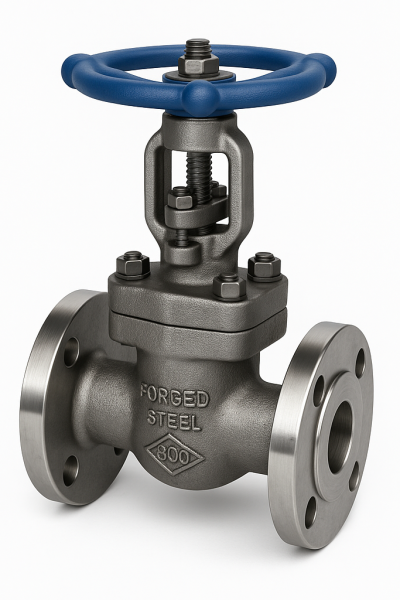
With the increasing automation of plants, nearly all valve types are now available with a pre-prepared mounting flange according to ISO 5210 or 5211. This combination of handwheel and mounting flange allows future automation with minimal modifications. If a mounting flange according to ISO 5210 or 5211 is not present, more extensive adjustments are necessary to automate these valves.
Standard-design ball valves and gate valves are not suitable for throttling. Using them in throttling applications risks damaging the seat and body due to cavitation forces. In such cases, control valves or control dampers are the recommended solution.
Actuation times
Butterfly valves, ball valves, and plug valves are known as 90° quarter-turn valves, which allows them to open or close very quickly with just a 90° rotation. Valves with threaded stems, in contrast, need multiple turns to operate, so opening and closing take considerably longer.
Seat tightness
Valves with soft seats provide better sealing than metal-seated valves, but they are limited to applications below approximately 150 °C.
Media containing solids
Deposits from solids in the seat area can affect valve performance. Gate valves naturally clean the seat when closing, while globe valves need higher closing force to achieve a tight seal. Lined valves behave differently: solids can damage the seat and cause leakage.
Space and weight considerations
Gate and globe valves are generally taller, heavier, and require more space than butterfly or ball valves. In areas with restricted installation space, only butterfly or ball valves may be practical. Installation is also simpler for butterfly valves. With a shorter face-to-face dimension and less weight, a DN 200 butterfly valve can be usually handled by one technician, whereas a DN 200 globe valve requires lifting equipment or multiple people due to its size and weight.